Field Storming Now Felony: Florida Law Puts Fans on Par With Serious Crimes
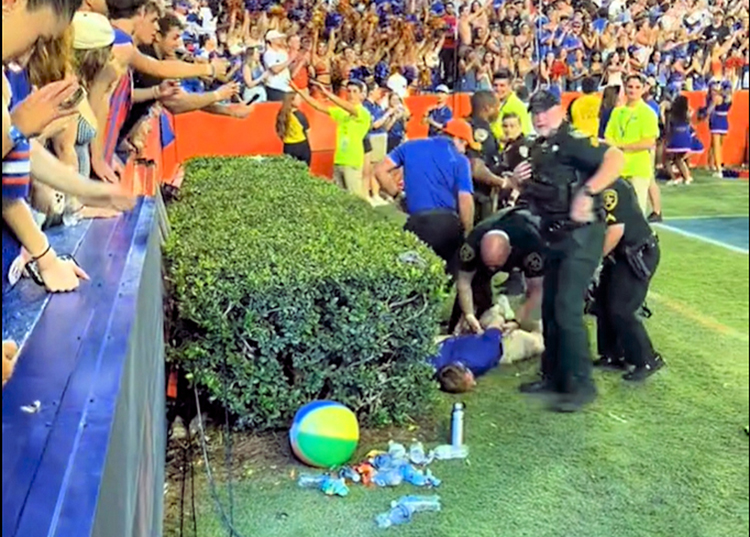
The exhilarating rush of a stadium-wide celebration, the spontaneous surge onto the field after a monumental victory – for decades, it's been an iconic, albeit rule-breaking, tradition in American college football. Yet, for four fans at the University of Florida, including 27-year-old John Paul Schmidt, that age-old exuberance has been redefined by a stark new reality. Following UF's upset win over Texas on October 4, 2025, these fans found themselves facing first-of-their-kind felony trespass charges under a new Florida law, a legislative twist that has sent shockwaves through the sports community and ignited a fervent debate about the future of fan engagement. This isn't just a slap on the wrist; it's a legal declaration transforming a moment of spirited joy into a serious criminal offense, putting football enthusiasts in Florida on par with individuals accused of far more grave crimes.
From Misdemeanor to Felony: Understanding Florida's New Stance
Historically, breaching security lines and running onto a sports field was typically treated as a misdemeanor, resulting in fines or minor legal repercussions. However, Florida's new law, signed by Republican Gov. Ron DeSantis in May and effective May 16, 2025, dramatically alters this landscape. It bans unauthorized entry into areas secured by law enforcement or large, ticketed sports and entertainment events. The penalties? Up to five years in prison and a $5,000 fine. This profound shift means that the jubilant dash across the turf, a spontaneous act born from the heat of victory, is now categorized alongside serious offenses such as aggravated assault, bribery, drug possession, or even child abuse.
The incident involving John Paul Schmidt, of Greensboro, N.C., and three other fans – two UF students and two older men – after the Gators' 29-21 triumph over the then-No. 9 Longhorns at Steve Spurrier-Florida Field, serves as a stark illustration of this new legal framework in action. These arrests, captured and circulated on social media, marked the first known felony charges filed under this specific statute across Florida. This John Paul Schmidt's Felony: Florida Law Redefines Football Fan Penalties case, therefore, acts as an unintended but powerful schmidt déclaration football for how state law enforcement is interpreting and applying these expanded powers. It's a clear message to fans: the celebratory pitch invasion is no longer a rite of passage but a potential pathway to a criminal record.
The Unintended Consequences of a Protest Law
Perhaps the most perplexing aspect of this legal development is its original legislative intent. Lawmakers in Tallahassee, including the bill's sponsor, Sen. Jonathan Martin, R-Fort Myers, explicitly stated the law was designed to target protesters, particularly those who might pose a threat to President Donald Trump or disrupt events where he was present. Senator Martin, chairman of the criminal justice committee, emphasized that the bill aimed to provide "tougher penalties against Trump protesters" and facilitate Secret Service efforts to "keep our president safe while he's in the State of Florida."
During a Senate Criminal Justice Committee hearing in March, Sen. Joe Gruters, R-Sarasota, sought clarity, asking, "So, just to be crystal clear, if somebody goes onto the field, they won't be charged with a felony?" Sen. Martin's response was definitive: "That's not the intent, and they can quote me in the case law if that becomes an issue." Yet, mere months later, that precise scenario unfolded, leading to felony charges for football fans. This stark contradiction between legislative intent and real-world application raises serious questions about legal interpretation and the unforeseen ripple effects of broadly worded statutes. The situation highlights a critical disconnect, turning a law meant to enhance presidential security into a blunt instrument against sports enthusiasts. This unexpected application is further explored in Florida's Protest Law: Unintended Felonies for Football Field Storming?
Adding another layer to the debate, even legendary former UF head coach Steve Spurrier weighed in, expressing his belief that such spontaneous celebrations at college games actually "energize players and make a lifetime memory for students." His sentiment underscores the cultural value many attach to these moments, a value now squarely at odds with Florida's new legal framework.
What This Means for Football Culture and Fan Engagement
The implications of Florida's new law extend far beyond individual arrests. It forces a fundamental reevaluation of football fan culture, particularly within a state where college football is practically a religion. Will the deterrent of felony charges and potential prison time extinguish the long-standing tradition of field storming? Or will it merely push fan celebrations into less visible, albeit still passionate, forms?
The global phenomenon of football (soccer), followed by billions and played by millions, is constantly evolving, with technology playing an increasingly significant role in every aspect, from business operations to the game itself. While the referenced context on technology's impact on football primarily discusses digital advancements, this legal development ironically introduces another layer of "technology" – that of surveillance and legal consequence. Stadiums are equipped with advanced cameras and security systems, making it easier than ever to identify and apprehend individuals. This technological capability, combined with severe legal penalties, could usher in an era where spontaneous fan expressions are virtually impossible without immediate, severe repercussions.
For fans attending games in Florida, understanding these new risks is paramount. Practical tips for enjoying the game without falling afoul of the law include:
- Know the Rules: Familiarize yourself with venue-specific policies and state laws regarding field access.
- Stay in Designated Areas: Resist the urge to enter unauthorized zones, no matter how exciting the moment.
- Find Alternative Celebrations: Channel your enthusiasm through cheers, chants, and planned fan events.
- Educate Fellow Fans: Spread awareness about the severe consequences to protect others from unintended legal trouble.
- Prioritize Safety: Remember that security protocols are also in place for crowd control and player safety.
This shift isn't just about Florida; it could set a precedent for other states grappling with similar issues of crowd control and security. The schmidt déclaration football might become a case study for how legal systems can fundamentally alter the intangible spirit of sports traditions.
Navigating the Legal Landscape: A Call for Clarity
The disconnect between legislative intent and the law's application to football fans demands urgent attention. It raises questions about the clarity of legal drafting, the interpretation powers of law enforcement, and the judicial process itself. If lawmakers explicitly stated the law was not intended for field storming, then the current application warrants a reevaluation.
The fact that this law elevates an act of celebratory trespass to the same criminal level as severe violent and predatory crimes underscores the urgent need for either legislative amendment or judicial clarification. Legal experts and civil liberties advocates are likely to scrutinize these cases closely, potentially leading to challenges that could shape how the law is interpreted in the future. For those like John Paul Schmidt facing these unprecedented charges, securing experienced legal counsel will be critical in navigating this complex and evolving legal landscape.
The saga of Florida's new felony trespass law and its unexpected application to football field storming represents a critical juncture for sports fans, legal systems, and legislative bodies. What began as an effort to enhance presidential security has inadvertently redefined the boundaries of fan engagement, turning moments of unbridled joy into potential legal nightmares. While public safety and order are undeniably important, the current situation highlights a stark imbalance between legislative intent and enforcement reality, threatening to erode long-cherished traditions. As the legal battles unfold and public debate intensifies, the future of spontaneous celebration at sporting events in Florida, and potentially beyond, hangs precariously in the balance, urging a more nuanced approach to balancing security with the vibrant spirit of the game.